


Get expert tips to spot hidden costs and upgrade potential.


What to check and why
When viewing properties, it’s easy to focus on kitchens and bathrooms, but heating, hot water and energy features can hide costs you’ll want to know about in advance. This guide gives you a simple checklist to help you understand:
- The condition of the existing heating system
- Where hidden costs or future upgrades might be waiting
- How straightforward it will be to add a heat pump, solar or a battery later
Use these checks to avoid surprises and get a clear picture of the home’s long-term potential.
Ask about the existing heating system
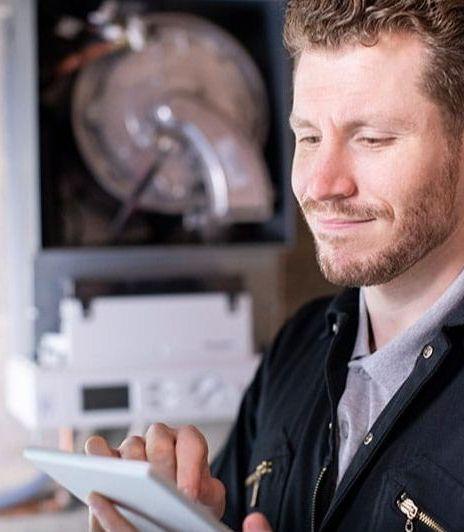
If there is a gas boiler
- Check the age: Modern boilers can last 18–22 years with regular servicing, so anything under 15 years old may still have plenty of life left.
- Check the service history: A well-maintained boiler is easier to keep running while you plan upgrades at your own pace.
- If it’s a combi: There’s no hot-water cylinder, so you’ll need space to add one for a future heat pump, this is very common and generally straightforward.
- If it’s a system or regular boiler: A cylinder is already in place. It may be older, but many cylinders can be adapted or easily swapped during a heat-pump upgrade.

There is an electric boiler or electric panel radiators:
- Heat bills are likely to be very high
- Switching to a heat pump will make significant savings, but all new radiators and pipework will need to be fitted
- A heating and cooling system (aka air conditioning that provides heating as well) may be less disruptive, but won't be eligible for the £7,500 grant
- Solar panels WILL NOT offset the cost of an electric heating system
What's the potential for a heat pump and solar?

1. Check there is enough external space
A heat pump needs a clear outdoor area with good airflow.
- Allow around 2m front-to-back for the unit and airflow, and roughly 1m width for the heat pump itself.
- Side walls, back gardens and suitable flat roofs all work well, as long as the unit has clear space around it.
- Avoid tight corners, alcoves or high fences that restrict airflow or create recirculating warm air.
- Check that there’s a straightforward route for pipework back into the house to keep installation costs down.

2. Check the heating system & hot water
A few quick checks tell you how easy a future upgrade will be.
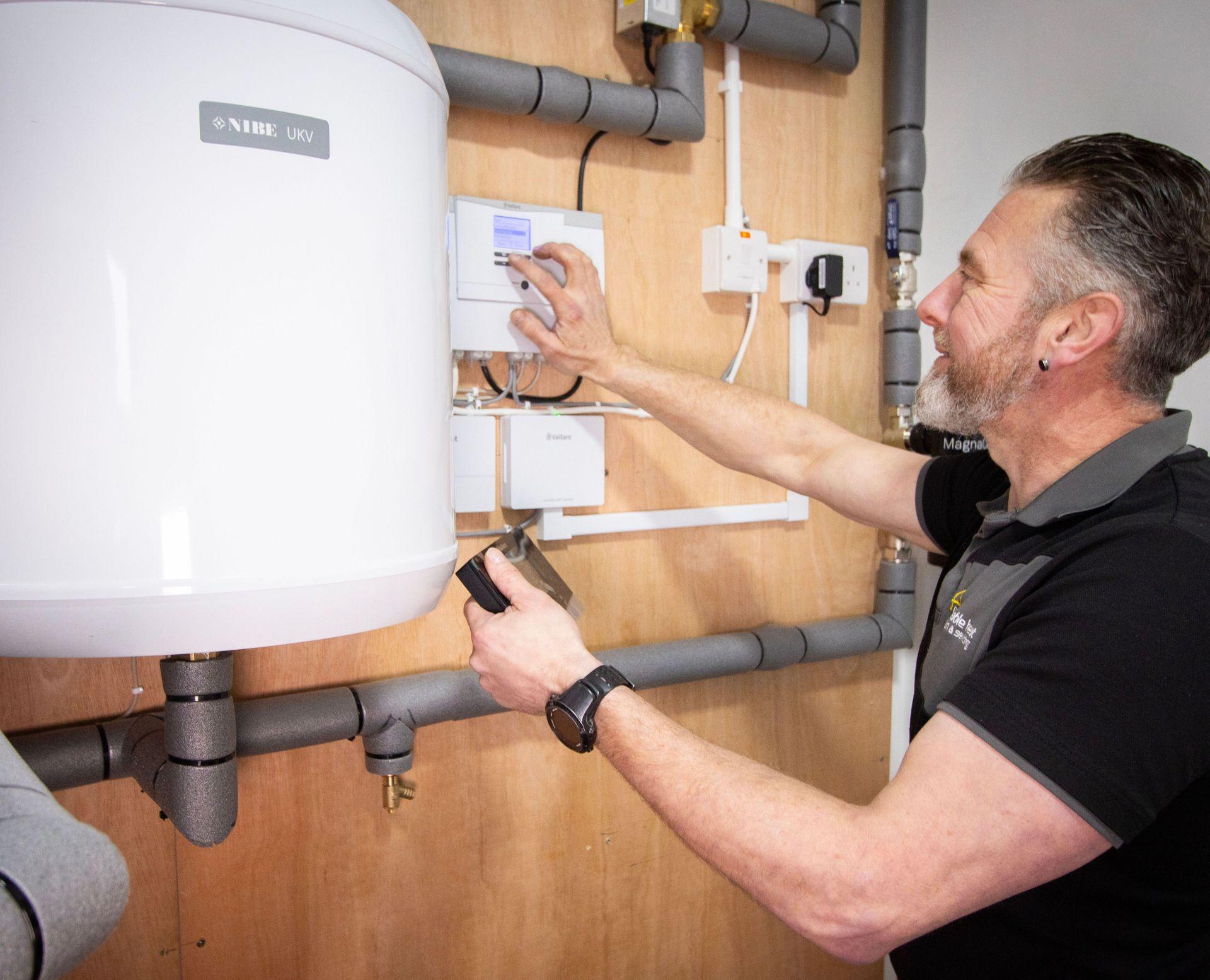
- A home with a hot-water cylinder is usually much easier to upgrade — even older cylinders can often be adapted or replaced as part of a heat-pump install.
- Combi-boiler homes will need space for a cylinder later, so look for an airing cupboard, spare cupboard or loft space where one could go.
- Standard radiators are normally fine, although very small ones may need upsizing to deliver comfortable heat at lower flow temperatures.
- 10mm small-bore pipework (found in many newer homes) can still work with a heat pump but may effect efficiency.
- The property does not need high levels of insulation — most UK homes work well with a heat pump as long as the system is designed correctly.
3. Check the electrical supply
Heat pumps are straightforward electrically, but these checks help avoid surprises.
- Check the electricity has 100A main fuse rather than 60/80A - this can be upgraded via the electricity supplier and is usually free of charge.
- If the home shares its incoming cable with a neighbour (“looped supply”), the DNO will need to separate it. This normally requires access to both properties.
- Older fuse boards may need updating; modern consumer units are usually fine.
- Ensure there's a suitable place for an external isolator switch.
4. Check the roof for solar potential
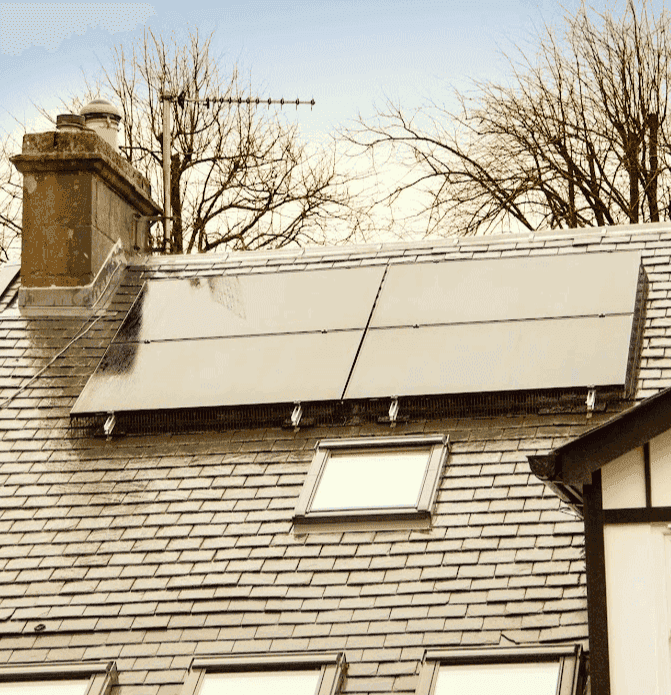
A quick look at the roof will tell you whether solar is a strong option for the home.
- South, southeast, southwest and east and west-facing roofs give the best output.
- Check for shading from trees, chimneys or nearby buildings.
- Make sure the roof is in good condition, particularly if it has a slate roof, as panels last 20–25 years.
- If multiple roof faces are available, mixed arrays can still work well.
- Flat roofs can also work with angled mounts if structurally suitable.
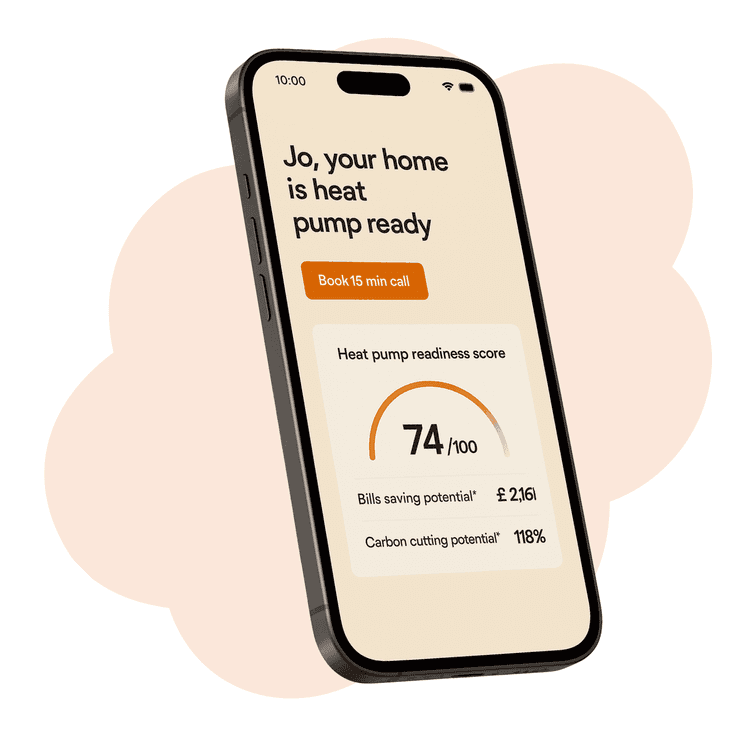
Enter any address to get a free Report & Readiness Score with clear advice on heat pumps, solar, batteries and tariffs.
 hello@warmur.co.uk


 v0.22.3